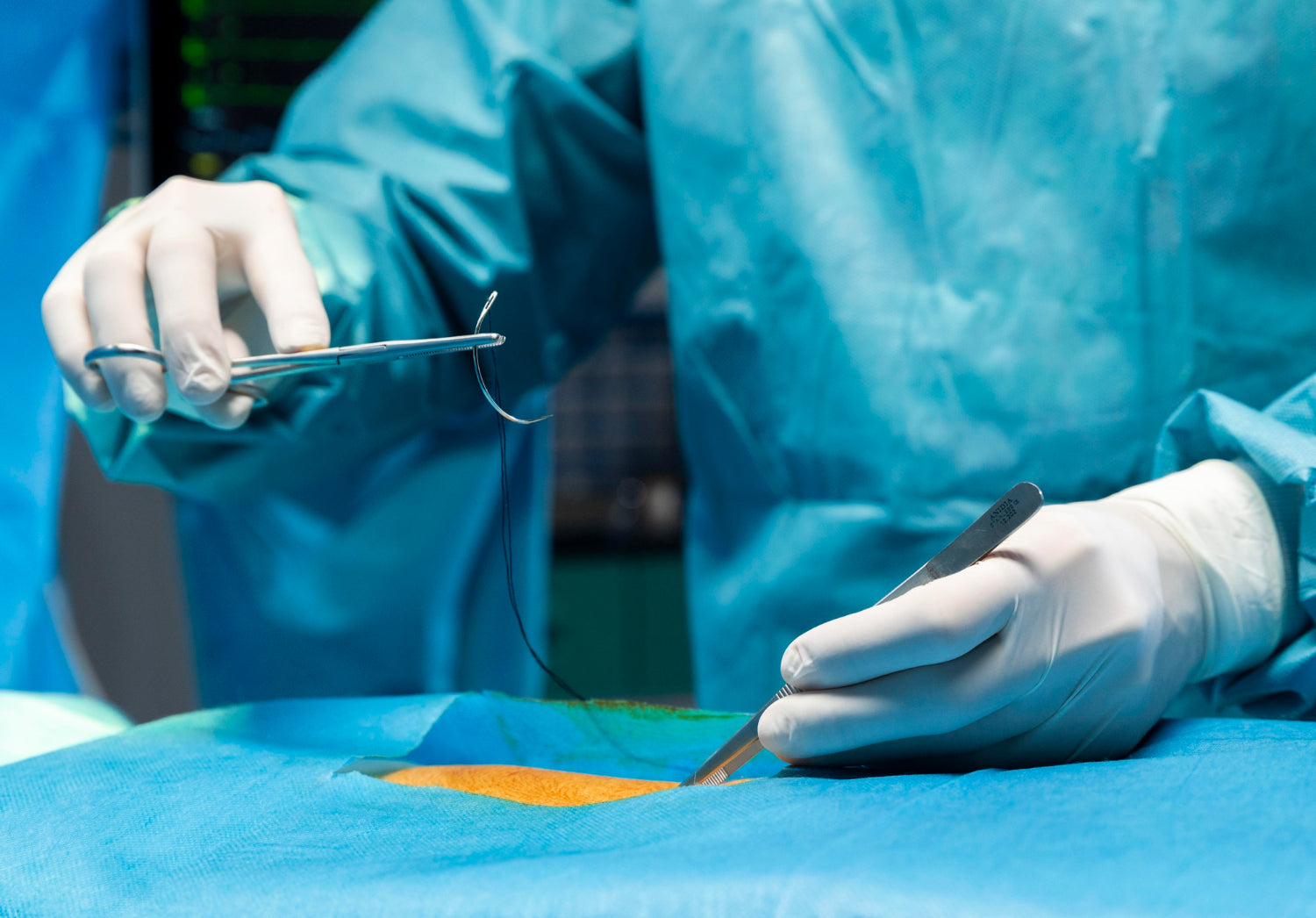
Flap stability over a dense ridge depends on far more than closing the wound well. For many dentists and dental surgeons, these cases highlight how unforgiving cortical bone can be and how small decisions, including suture material choice, can influence soft tissue behavior in the early healing period. When access, tension, and patient comfort are all competing for attention, it can be useful to have a clear way of thinking about medical sutures, rather than reaching for whatever is closest at hand.
In this article, we look at dense ridge situations from a flap management perspective, then outline how different suture characteristics may relate to clinical judgment. This content is for educational and informational purposes only and is not treatment advice, a protocol, or a substitute for professional training, clinical guidelines, or individual patient assessment.
Elevating Flap Stability in Challenging Ridge Cases
Dense ridges, in a periodontal, oral surgery, or implant context, often include thick cortical plates, limited marrow spaces, and reduced compressibility of the bony housing. Over these areas, soft tissue is frequently thinner and less forgiving, especially in previously edentulous or heavily restored segments. Gaining access while still planning for a tension-minimized closure can be a constant balancing act.
Flap management is particularly demanding here because cortical bone does not give under tension. When flap advancement is limited, even small amounts of residual tension at closure can:
- Concentrate stress along the incision line
- Be associated with marginal dehiscence
- Make minor patient habits more clinically relevant
One element under the clinician’s control is the type of medical sutures selected. While no material can ensure a specific outcome, aligning suture properties with local conditions may contribute to more consistent soft tissue handling and a more deliberate approach to working with the ridge.
Clinical Considerations for Flap Management Over Dense Ridges
Dense ridge sites often present with a thinner biotype and reduced keratinised tissue, especially in long-standing edentulous areas. Even with careful periosteal release, the flap may offer limited passive advancement, so any deficiency in design or tension control can become more evident.
Commonly reported challenges include:
- Difficulty in achieving passive primary closure
- Increased likelihood of marginal opening near the crest
- Localised blanching that may indicate compromised perfusion
These flaps are also exposed to functional and behavioural factors. Parafunction, tongue habits, ill-fitting provisionals, and hygiene aids can all increase mechanical stress on sutured tissues. Prosthetic contours that focus pressure on the crest may further challenge the closure.
Clinicians often weigh:
- Surgical access and visibility around the ridge and implant site
- Flap mobility without over-thinning delicate tissue
- Haemostasis and clot stability
- Gentle handling to limit additional trauma
In this context, suture material becomes one component of a broader strategy that also includes incision design, flap release, and prosthetic planning.
Key Suture Material Properties to Consider
When discussing medical sutures for dense ridge flap management, several core characteristics are frequently considered.
Absorbable vs. non-absorbable
Absorbable sutures can reduce the need for removal in deeper layers and are often used to support internal tension relief. Non-absorbables are usually chosen for superficial closure where monitoring and timely removal are planned. The decision commonly reflects how long mechanical support is expected or desired at the surface.
Monofilament vs. braided
Monofilaments generally offer:
- Smoother passage through tissue
- Lower plaque retention potential
- Slightly more memory in some materials
Braided sutures usually provide:
- Softer handling and knot tying
- Higher perceived knot security
- Greater friction against instruments and tissue
Over a dense ridge with thin tissue, smoother passage and reduced drag may be advantageous, while in other cases, a braided option may feel more controllable in the clinician’s hands.
Tensile strength retention and handling
The duration for which a suture maintains its strength, and how predictable it feels during use, can influence how it is incorporated into flap management. In higher tension areas or where patient habits may be less controlled, some clinicians prefer a material that retains adequate strength through the initial healing period, even if it is removed relatively early.
Tissue reactivity and plaque accumulation
Lower tissue reactivity and easier cleaning can be beneficial in inflamed or grafted sites. Materials that resist plaque accumulation and allow patients to keep the area cleaner may contribute to a calmer marginal environment. This is one reason many clinicians review product details closely when they select from a range of medical sutures for different case types.
Relating Suture Types to Flap Design and Local Anatomy
Flap designs over dense ridges are often full-thickness to preserve periosteal blood supply and visual access to the bony crest, but split-thickness or combined designs are also used. Each approach places different demands on sutures.
For example:
- Full-thickness flaps over sharp or irregular bone may be more comfortable to manage with sutures that pass smoothly and minimise trauma
- Releasing incisions can concentrate tension at their apices, where knot characteristics and tissue grip become important
- Split-thickness components may be thinner and more prone to tearing with aggressive manipulation
Soft tissue thickness, width of keratinised tissue, and the presence of grafting materials or membranes all influence suture diameter and material preferences. A thicker, graft-augmented ridge may accommodate slightly larger diameters, while very thin, delicate tissue near an implant shoulder may be managed with finer sizes and materials designed for minimal drag, according to clinician preference and training.
In daily practice, clinicians often weigh trade-offs such as:
- Ease and speed of removal versus the perceived need for longer support
- Patient comfort if sutures are in high-movement areas
- How quickly staff can identify sizes and needle types during busy sessions
Having consistent access to familiar suture lines and clear labelling, especially when integrating other products like surgical staplers for appropriate procedures, can contribute to streamlined workflows for the entire team.
Considering Suture Techniques in Ridge Management
Suture choice and technique are closely related. Vertical mattress, sling, and interrupted sutures are often mentioned in dense ridge and implant-related closures, but how they perform in a given case depends in part on material behaviour, clinician experience, and individual patient factors.
Diameter, elasticity, and memory can:
- Influence how easily knots remain where intended
- Affect efforts to obtain slight eversion at the margins
- Change how the flap adapts over irregular crestal contours
A suture with more elasticity may distribute tension differently but can also exhibit more pronounced memory in some materials. A less elastic, more stable material may hold the flap firmly but might transmit more stress to a thin margin if tension is not carefully managed.
Across techniques, frequently cited principles include:
- Gentle handling to avoid additional trauma in thin biotypes
- Deliberate distribution of tension across multiple sutures
- Knot positioning that avoids pressure points directly over bony edges
These points are shared as general considerations rather than step-by-step instructions, and they are intended to complement, not replace, established training, guidelines, or clinical protocols.
Practical Considerations When Sourcing Medical Sutures
From a practical standpoint, selecting sutures involves more than the material itself. Dental professionals often look for:
- A logical range of absorbable and non-absorbable options
- Predictable sizing and easy-to-read packaging
- Clear description of needle curvature, length, and point type
Consistent access to sutures that feel familiar in the clinician’s hands can make it easier for assistants and hygienists to anticipate what is needed, label custom kits, and provide support chairside. When teams are also working with equipment such as ergonomic saddle stools, a well-organised operatory setup can reduce small sources of stress during longer ridge and implant procedures.
ProNorth Medical works with dental and surgical teams across Canada and other regions, with particular attention to these day-to-day details. The ability to compare materials and align them with preferred flap designs and techniques can assist practices in assembling a suture kit that reflects their own way of working.
Refining Flap Management Choices Over Time
Dense ridge cases are inherently demanding, as the underlying anatomy is less forgiving. When flap design, local tissue conditions, and suture material characteristics are considered together, clinicians can approach soft tissue management in a more structured and intentional way.
Clinicians are encouraged to rely on manufacturer information, current literature, formal education, and personal clinical experience when refining suture preferences for these situations. Over time, many teams report that a carefully selected range of medical sutures, integrated with their broader approach to ridge and implant surgery, contributes to a more organised and consistent method of working.
This article is not intended to direct patient care or replace individual clinical judgment. Treatment decisions should always be based on the clinician’s professional training, licensed scope of practice, and the specific needs of each patient.
Upgrade Your Surgical Outcomes With Reliable Suturing Solutions
Choosing the right sutures can make a measurable difference in patient outcomes and workflow efficiency. At ProNorth Medical, we provide high-quality medical sutures that are carefully selected to support Canadian healthcare professionals in every clinical setting. Explore our range today so you can stock dependable products that help your team work with confidence and consistency.



Leave a comment
This site is protected by hCaptcha and the hCaptcha Privacy Policy and Terms of Service apply.